
Bexar County Resident Records Evidence
Each official source answers a narrower question. Bexar Appraisal District can connect a parcel to its displayed owner label, situs, and property details. The Bexar voter search can return a dated registration match when its required inputs match. The County Clerk and District Clerk keep different kinds of cases and documents. Treat every result as evidence of what that particular record says, not as a claim about a person today.
| Record | What It Confirms | Where | Access |
|---|---|---|---|
| Parcel and appraisal | Displayed parcel situs, owner label, and property attributes | BCAD and the Bexar parcel layer | Online, counter, or PIA route; displayed data can be suppressed or stale |
| Voter registration | Registered address, precinct, and election geography | Bexar Voter Registration Search | Individual lookup; protected records can be suppressed |
| Court case index | Party, court, case number, filing date, and case type | Bexar Smart Search | Portal index and clerk counter; files may be restricted |
| Vital index or verification | A birth, death, marriage, or divorce event lead | Texas DSHS indexes | Index access differs from certified-copy eligibility |
| Recorded instrument or probate | Recorded party, date, legal description, or estate context | Bexar Official Records Search | Index and document availability vary by record and redaction |
Start with the source that fits the question already known. A parcel number is useful for a property trail, while a case number should go directly to the court custodian. A surname alone can surface possibilities, but it does not identify a Bexar County resident. Save the exact spelling that the source displays.
Bexar County Voter Search Records
The Bexar voter application is deliberately narrow. It first requires a date of birth in MM/DD/YYYY format and a house number, then requires the voter’s last name for the final match. A result may show the registered address, precinct, polling information, representatives, and election material. It does not establish physical presence at that address today, and a missing result should be reported only as not located in that search.
The official voter search is shown below. Use the application only for an individual search with legitimate inputs. Texas Election Code §13.004 and related guidance protect specified voter information, so an address can be hidden or replaced. Do not attempt to fill in a protected result from other sources.
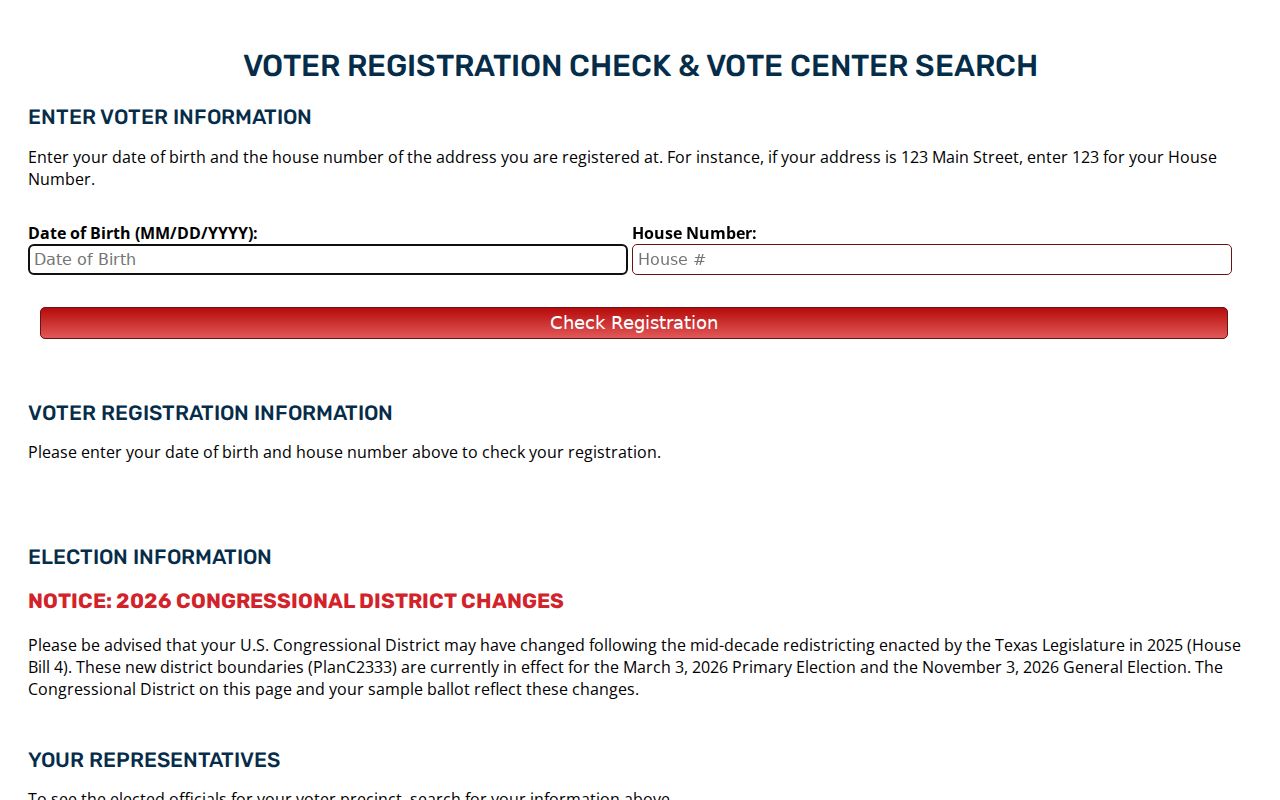
The required fields make the result more useful as one of two identity anchors, rather than a broad name list. Record the search date because precincts and election details can change.
Note: A registration result is a dated election record, not proof that a person currently occupies the listed address.
Bexar County Court Name Records
The County and District records hub routes court research to the correct local office. Bexar Smart Search accepts a record number or name and provides filters for location or area of law, search type, SO number, file-date range, and judicial officer. Its search types include cases, judgments, warrants, and cross-reference numbers, and it has a hearings search. The portal guide reports a 200-result limit.
Use County Clerk records for county civil, county criminal, and probate filings. The District Clerk is the custodian for district civil and felony matters, including divorce case files. A portal entry is an index, not the complete file. Juvenile, sealed, expunged, confidential family, and protected information may be absent or redacted. For a broader historical or official copy, contact the clerk that holds the case instead of treating an empty online result as final.
| Result detail | Why it matters |
|---|---|
| Case or record number | Gives the clerk a precise file identifier. |
| Court and case type | Separates a County Clerk route from a District Clerk route. |
| Party name and role | Shows how the name appears in that case, not a current address. |
| Filing and event dates | Places the result in time and helps distinguish same-name people. |
| Document or image availability | Signals whether the next step is a clerk request for a releasable record. |
Bexar County Vital Index Records
Texas DSHS maintains the statewide birth and death indexes and marriage or divorce verification routes. The digital birth index begins in 1925, and the digital death index begins in 1965; earlier microfiche starts in 1903. Index entries are arranged by event year and can include surname, given name or initial, date, county, and sex. Those details help test a possible match, but an index and a certified record are not the same product.
Birth records are generally restricted for 75 years, and death records for 25 years. Closed-period requests require the relationship or direct-tangible-interest qualification that the state applies. A certified Bexar marriage license comes from the County Clerk, while a certified divorce decree comes from the District Clerk. DSHS verification may confirm an event without supplying the county license or court decree.
The Texas vital applications and forms page is the starting point for the state’s current request instructions.
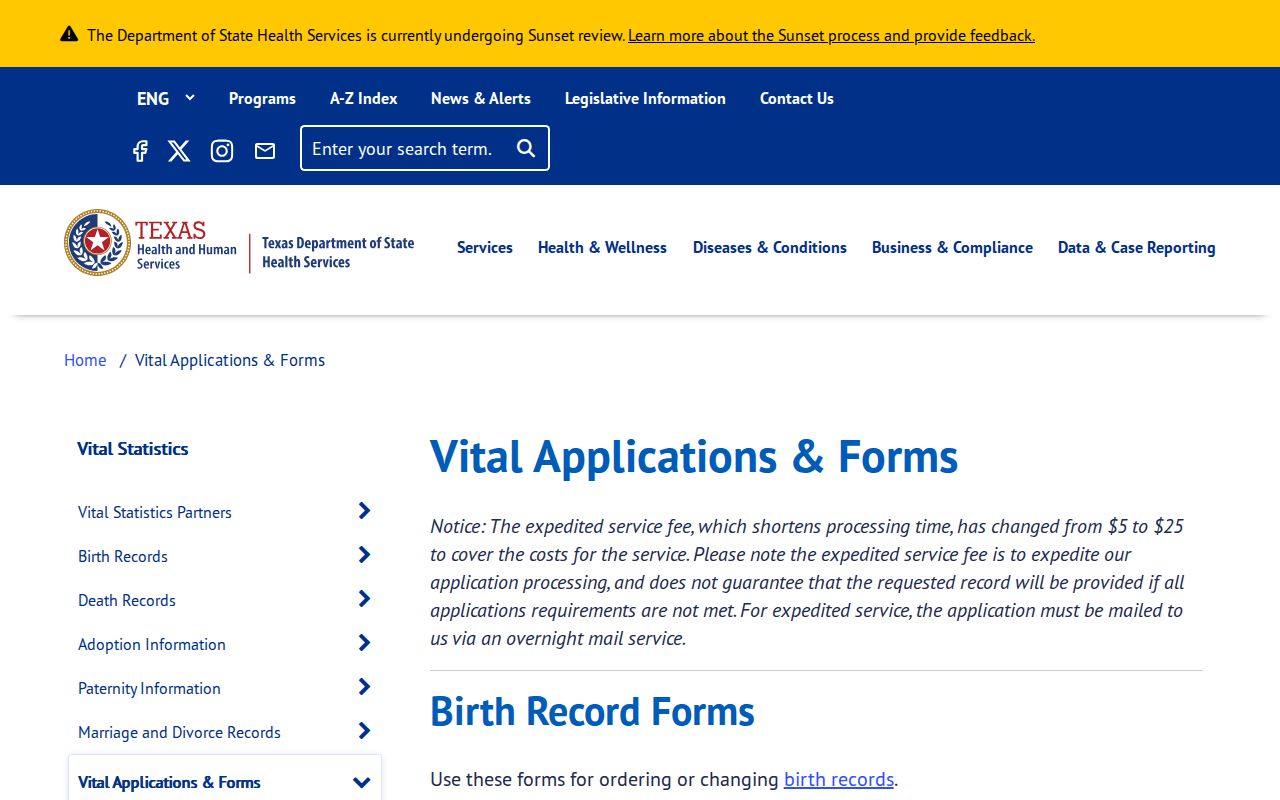
Use a vital index to frame a focused custodian request, then confirm which office issues the particular record. Do not reproduce sensitive application information in a query or request.
Verify Bexar County Resident Records
A right-person match needs two independent anchors whenever possible. Match a full name and the same street or parcel, or pair a name with a case number and filing date. A directory address paired with a deed legal description can also work when both dates make sense. One name-only hit remains a possible match. This matters in Bexar County, where common surnames, suffixes, repeated street names in different municipalities, rural routes, and business names can create false matches.
- Write down the name exactly as printed, including middle initial, suffix, accent, or former name when the source prints it.
- Anchor it to one dated address, parcel, case, instrument, or voter precinct from an official result.
- Find a second source that independently repeats a compatible address, date, role, or identifier.
- Request a releasable underlying record from the correct custodian only when the two sources still leave a material question.
- Docket
- A court’s running list of case events, filings, and dates. It is not a complete narrative of the case.
- Index and image
- An index points to a record. An image is a scan of the document and may be restricted, redacted, or unavailable online.
- Certified copy
- A copy the issuing custodian authenticates for the purpose allowed by that office’s rules.
A historical address needs its own date check. The printed address in a city directory or archive item describes that edition or record date, not a present-day residence. For an address-based chain, use the Bexar County street directory route rather than expanding a one-person search into a street roster.
Bexar County Archive Name Records
San Antonio’s Municipal Archives can add a dated local record when current indexes end. Its collections include historic city birth records from 1896 to 1936, death records from 1873 to 1926, city deeds, tax maps, engineer maps, elections, and municipal material. The San Antonio Archive Search offers a simple Search Text field and an advanced search with two rows, options, dates, media, and digital-collection filters.
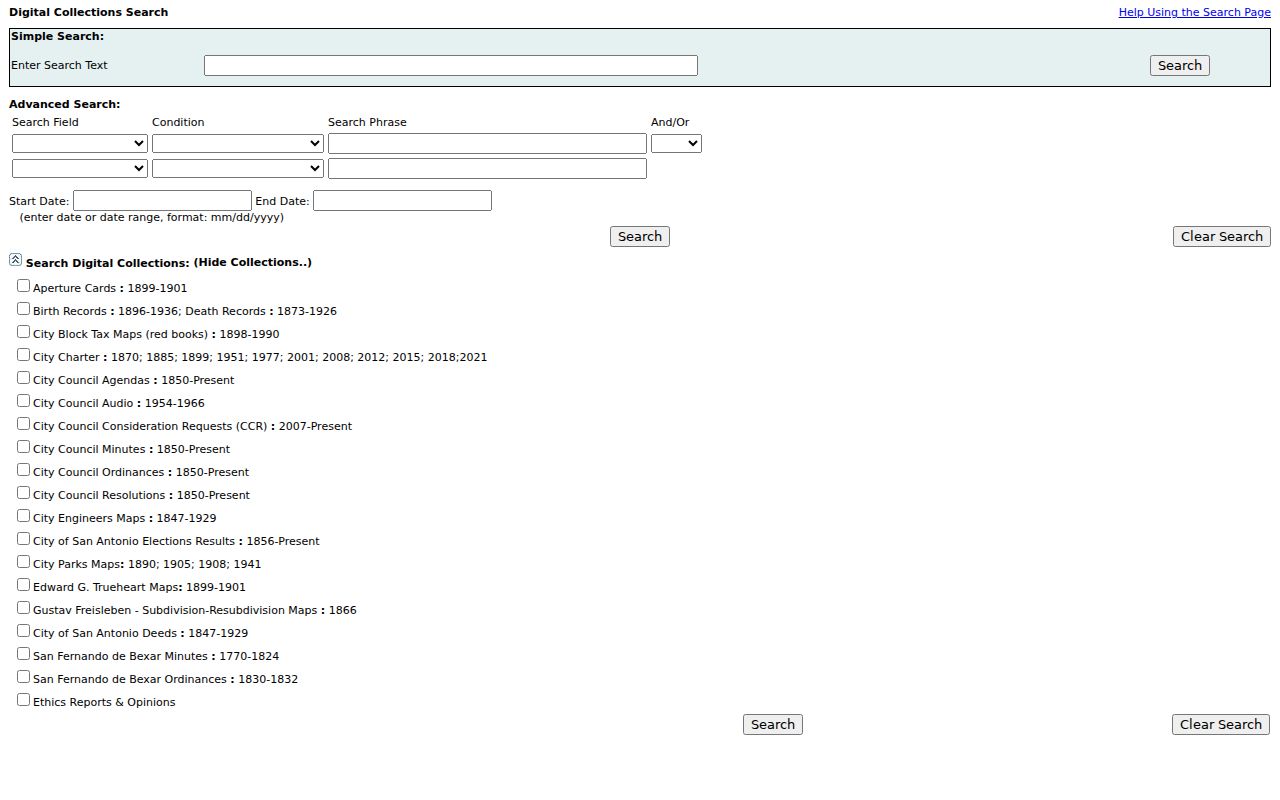
An archive hit may lead to a digital image, a finding aid, or a physical series. Preserve the collection name, date, and any identifier, then ask the Municipal Archives about an item that is not digitized. A historic city birth or death entry adds local context but does not replace DSHS access rules for a current certified record.
Bexar County PIA Record Search
When the online index stops, a Texas Public Information Act request under Texas Government Code chapter 552 can seek existing records from the governmental body that holds them. Use the Bexar County public-records request route for county material. Name the office, record type, date range, and a case, instrument, or parcel identifier. Ask for an existing index entry or releasable image, not for the agency to build a list of people or answer a conclusion about someone.
A custodian can seek clarification, provide an estimate, identify an exception, state that no responsive record was located, or route a request where permitted. Fees and timing vary with volume, review, format, and condition. For city-held material, use San Antonio’s separate open-government request route. Keep a copy of the request and the exact search terms so a later archive or clerk inquiry can be narrower.
Note: An agency response of no responsive records describes the requested office and date range, not the absence of every possible record.
Bexar County Record Privacy Limits
Texas public records have real boundaries. The Office of the Attorney General’s Address Confidentiality Program can provide a substitute address for qualifying survivors. Voter protections can suppress specified information, and BCAD offers website suppression that does not erase every governmental record. Court and vital material can be sealed, restricted, redacted, or available only to an eligible requester. An omitted address is not proof that a person is absent, and protected information should never be reconstructed from nearby records.
Texas data-privacy rules for covered businesses do not require a county to erase a public deed. If an official record is wrong, contact the custodian that created or maintains it. Use words such as listed, indexed, recorded, filed, displayed, or mapped, and label the relevant event date. Those small distinctions keep a dated result from becoming an unsupported claim.
Lawful use. Use official Bexar County records for personal, lawful research. Do not use an address, archive item, voter result, or court index to stalk, harass, threaten, or intimidate another person.